

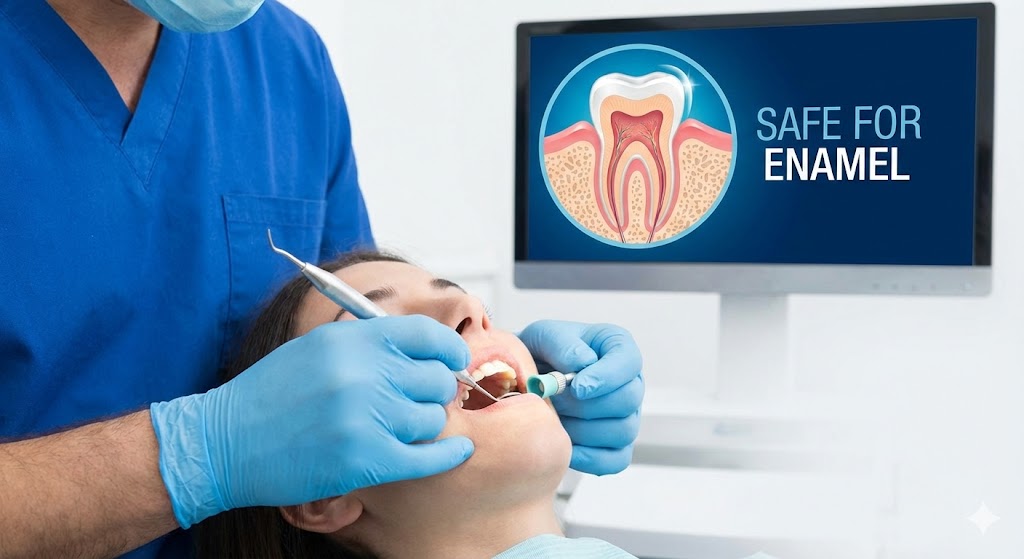
Scaling and polishing is one of the most common dental procedures recommended by dentists in Singapore, yet it remains one of the most misunderstood. A frequent concern we hear at Dental Clinic Thomson is:
“Does scaling and polishing damage my teeth or enamel?”
What Is Dental Scaling and Polishing?
Dental scaling and polishing is a professional teeth-cleaning procedure that removes:
- Plaque (soft bacterial deposits)
- Tartar / calculus (hardened plaque)
- Surface stains from coffee, tea, wine, smoking, and certain foods
In Singapore, scaling and polishing is considered preventive dentistry, often recommended every 6 months, depending on your oral health condition.
Scaling removes harmful deposits from above and below the gum line, while polishing smoothens tooth surfaces to reduce future plaque build-up.
The Big Question: Does Scaling and Polishing Damage Enamel?
Short Answer: No — when done correctly, scaling and polishing does NOT damage tooth enamel.
This conclusion is supported by:
- Peer-reviewed studies (including NIH & PMC publications)
- Dental associations globally
- Clinical consensus among dentists in Singapore
Tooth enamel is the hardest substance in the human body—much harder than the ultrasonic instruments used during scaling.
👉 What actually damages enamel is not scaling, but:
- Long-term plaque accumulation
- Acid-producing bacteria
- Gum disease and bone loss
- Skipping professional dental cleaning for years
Why Do People Think Scaling Damages Teeth?
This myth is extremely common in Asian communities, including Singapore. Here’s why:
1. Teeth Feel Sensitive After Scaling
After tartar removal, exposed areas of the tooth may feel temporarily sensitive. This is not enamel loss, but:
- Previously covered root surfaces being exposed
- Inflamed gums shrinking back to a healthier state
Sensitivity usually resolves within a few days.
2. Teeth Feel Rough or Loose
Patients sometimes feel gaps or roughness after scaling. That’s because tartar was filling those spaces, not because teeth were damaged.
3. Bleeding Gums
Bleeding is a sign of existing gum inflammation, not damage caused by scaling.
Scientific Evidence: What Research Says
Multiple studies (including those published on PubMed Central) confirm:
- Ultrasonic and hand scaling do not remove enamel
- Polishing agents are designed to be less abrasive than enamel
- Regular professional cleaning reduces tooth loss risk
In fact, skipping scaling increases the risk of:
- Periodontitis
- Tooth mobility
- Tooth loss
- Costly future treatments
Scaling vs Enamel Erosion: Know the Difference
| Scaling & Polishing | Enamel Erosion |
| Dentist-controlled | Caused by acids |
| Clinically safe | Irreversible |
| Preventive | Destructive |
| Improves gum health | Weakens teeth |
Enamel erosion in Singapore is often linked to:
- Sugary drinks
- Bubble tea
- Acidic diets
- Frequent snacking culture
Is Scaling and Polishing Safe for Sensitive Teeth?
Yes. In fact, scaling helps reduce sensitivity long-term by:
- Removing bacteria near the gums
- Reducing inflammation
- Allowing gums to heal
At Dental Clinic Thomson, we also offer:
- Gentle ultrasonic scaling
- Desensitising agents
- Airflow polishing (where suitable)
How Often Should You Do Scaling and Polishing in Singapore?
Most Singapore dentists recommend:
- Every 6 months for healthy patients
- Every 3–4 months for those with gum disease, smoking habits, or braces
Singapore’s fast-paced lifestyle, high coffee consumption and stress levels make regular cleaning even more important.
Can Over-Frequent Scaling Damage Teeth?
Another common myth.
❌ Scaling itself does not damage teeth
⚠️ But unnecessary aggressive polishing done too frequently may increase sensitivity
That’s why treatment should always be individualised, not commercialised.
Scaling and Polishing vs Deep Cleaning
- Scaling & Polishing: Routine maintenance
- Deep Cleaning (Root Planing): For gum disease
Neither damages enamel when done professionally.
Singapore-Specific Factors That Increase Need for Scaling
- High consumption of kopi & teh
- Smoking prevalence
- Ageing population
- Busy professionals skipping dental visits
- High awareness but delayed action
Government initiatives like CHAS encourage preventive care, making scaling more accessible.
Benefits of Regular Scaling and Polishing
- Prevents gum disease
- Protects enamel (by removing acids & bacteria)
- Reduces bad breath
- Improves smile aesthetics
- Lowers long-term dental costs
What Happens If You Avoid Scaling for Years?
Ironically, avoiding scaling due to fear of enamel damage often leads to:
- Severe gum recession
- Bone loss
- Tooth mobility
- Actual enamel erosion from bacteria
Is Scaling and Polishing Painful?
Most patients experience:
- Mild discomfort at most
- No pain with modern ultrasonic tools
Topical anaesthesia can be used for sensitive patients.
Why Dentists at Dental Clinic ThomsonEmphasise Gentle Care
At Ashford Dental Centre, scaling and polishing is:
- Evidence-based
- Minimally invasive
- Customised to your oral condition
- Performed using modern ultrasonic equipment
We focus on preserving enamel, not harming it.
Common Myths About Scaling and Polishing (Debunked)
❌ Scaling weakens teeth
❌ Teeth become loose after cleaning
❌ Enamel gets scraped away
❌ Scaling causes gaps
✅ All false when treatment is done correctly
Final Verdict: Does Scaling and Polishing Damage Teeth or Enamel?
Absolutely not.
In fact, scaling and polishing is one of the best ways to protect your enamel, gums and long-term oral health.
Avoiding it due to myths can cause far more harm than good.
How Dental Clinic Thomson Can Help
If you’re concerned about enamel safety, sensitivity or frequency of scaling, speak to a dentist who prioritises preventive care over overtreatment.
👉 Dental Clinic Thomson offers gentle, evidence-based scaling and polishing tailored for Singapore patients.
📅 Book an appointment today
📍 Visit Us: Dental Clinic Thomson
📞 Call Now:+65 66904691